

The Complete Guide To Reusable Cloth Pads
Reusable pads — also called cloth pads — are an easy, effective alternative to disposables that more and more people are making the switch to. Whether you're just curious or already sold on the idea, this guide covers everything: how they work, how many you need, how to wash them, and how to find the right fit for your flow.
What Are Reusable Pads?
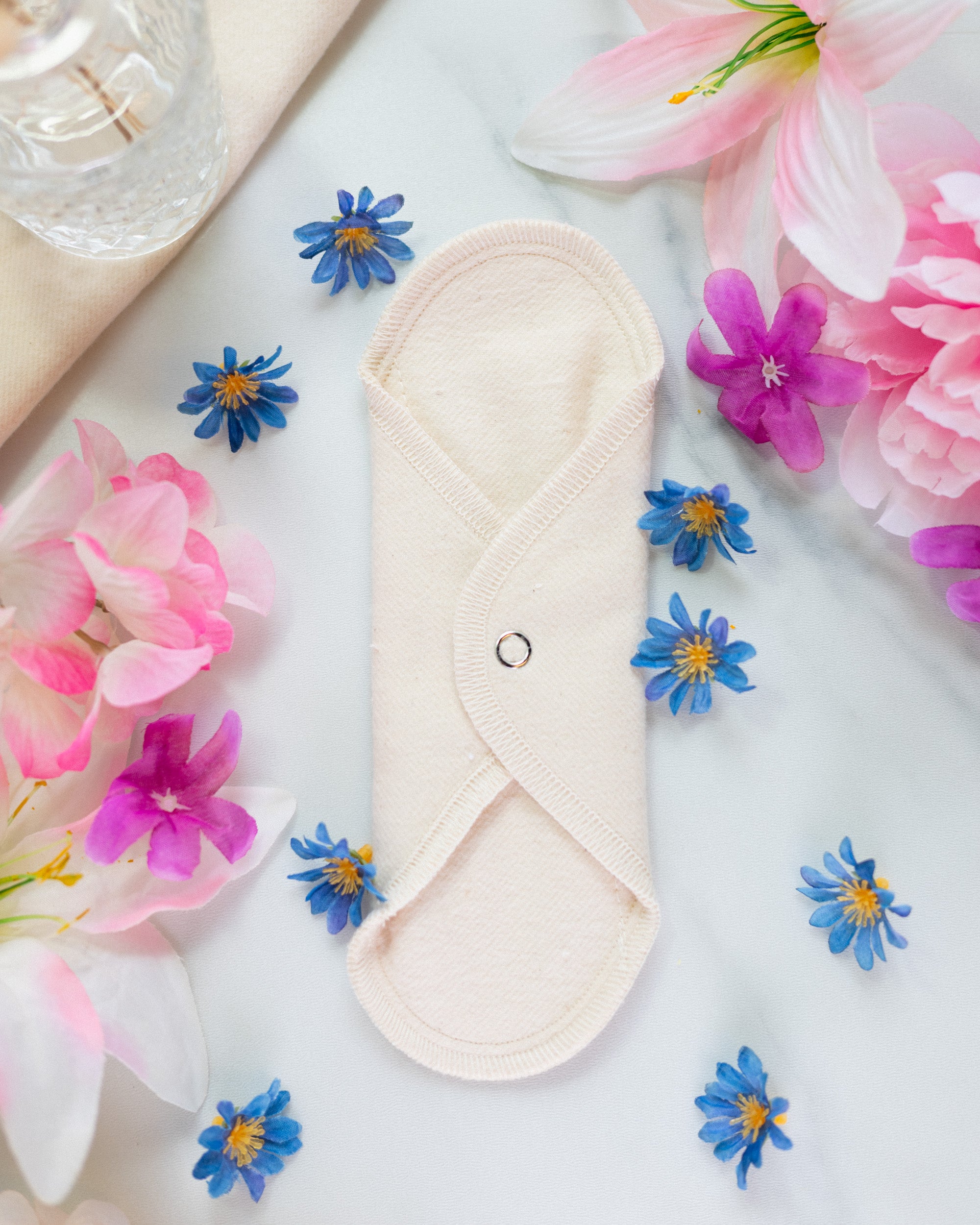
Reusable pads — also called cloth pads — are washable fabric pads you wear instead of disposables, then wash and reuse. They snap into your underwear just like a regular pad, without the single-use waste.
Some brands use plastic “leakproof” liners, which can trap moisture and reduce breathability. GladRags pads are different — made with 100% cotton flannel and absorbent cotton layers, with no plastic or synthetic treatments.
Our Reusable Cloth Pads Come in Three Styles


Benefits Of Reusable Pads
Easier on your body
Disposable pads often contain plastics, adhesives, fragrances, and chemical treatments that can irritate sensitive skin. Switching to 100% cotton reusables tends to reduce chafing, itching, and general discomfort — and many people with conditions like endometriosis or vaginitis find cloth pads significantly more manageable on difficult days.
Many GladRags customers also tell us that switching gave them a more positive relationship with their cycle — something we never expected to be in the business of, but genuinely love to hear.
Cost-effective over time
The average person uses 12,000–16,000 disposable pads or tampons over their lifetime. GladRags pads are guaranteed to last at least 5 years, and many customers use theirs for 10 or more. At current disposable pad costs — which rose 41% between 2019 and 2024 — the average person spends around $180 per year on menstrual products. Over 5 years, that's $900. A set of GladRags pays for itself and keeps paying.
Better for the planet
Disposable pads and tampons can take 500–800 years to decompose — every one you've ever used is still out there. Each GladRags pad keeps approximately 240 disposables out of the landfill. All of our pads are sewn by hand in Portland using methods that minimize waste and repurpose scrap fabric.
How Reusable Pads Work
Using a reusable pad is straightforward:
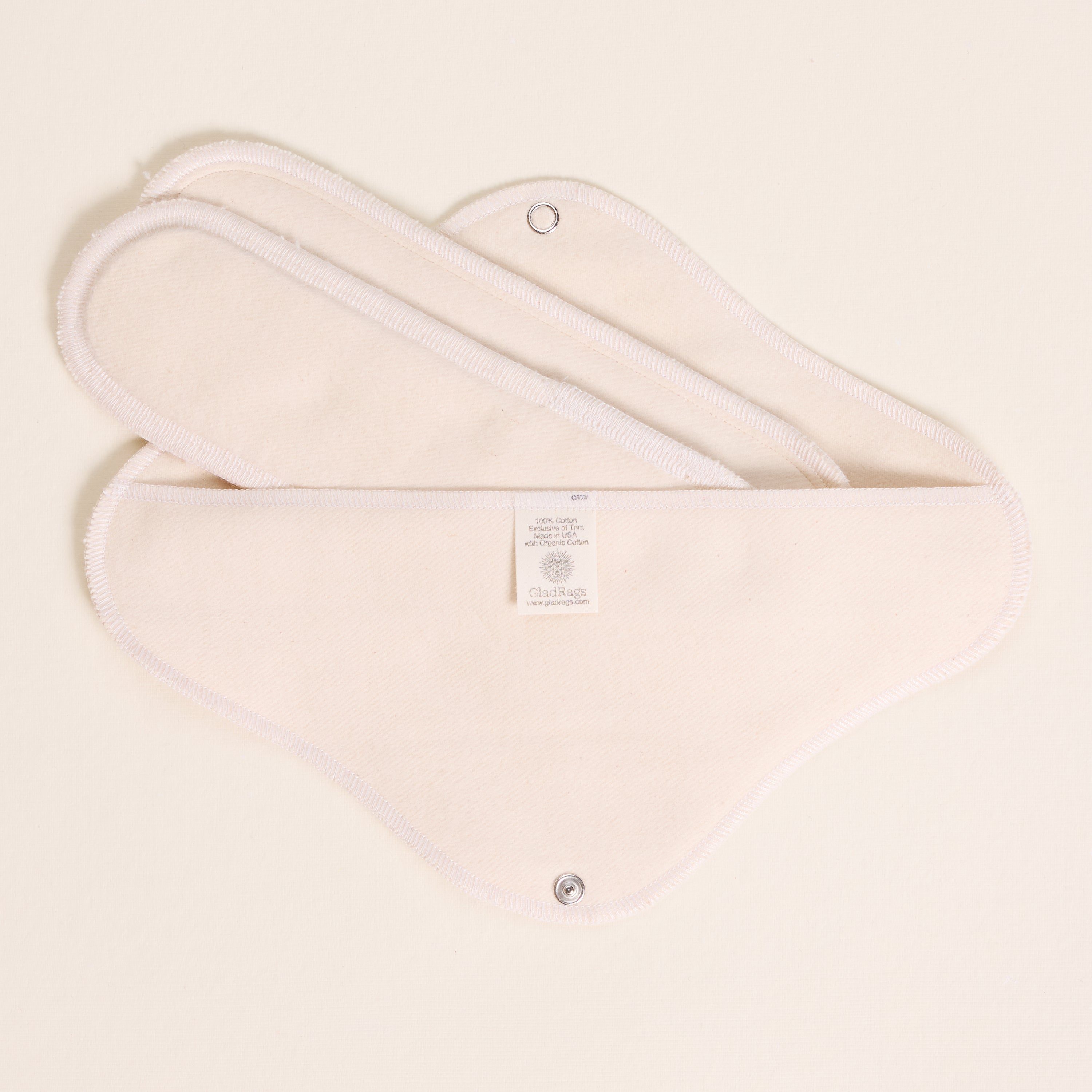
- Place the pad in your underwear, absorbent side up
- Wrap the wings around the gusset and snap them closed to secure the pad
- Wear until it's time to change, then swap for a clean pad
- Wash and reuse
Day Pads and Night Pads include two removable inserts, so you can customize absorbency — one insert for lighter days, both for heavier ones. Pantyliners are a single piece and work well for light flow, spotting, or as backup for a cup or disc.
A Quick How-To-Guide for Snapping Cloth Pads Into Your Underwear

How Many Reusable Pads Do You Need?
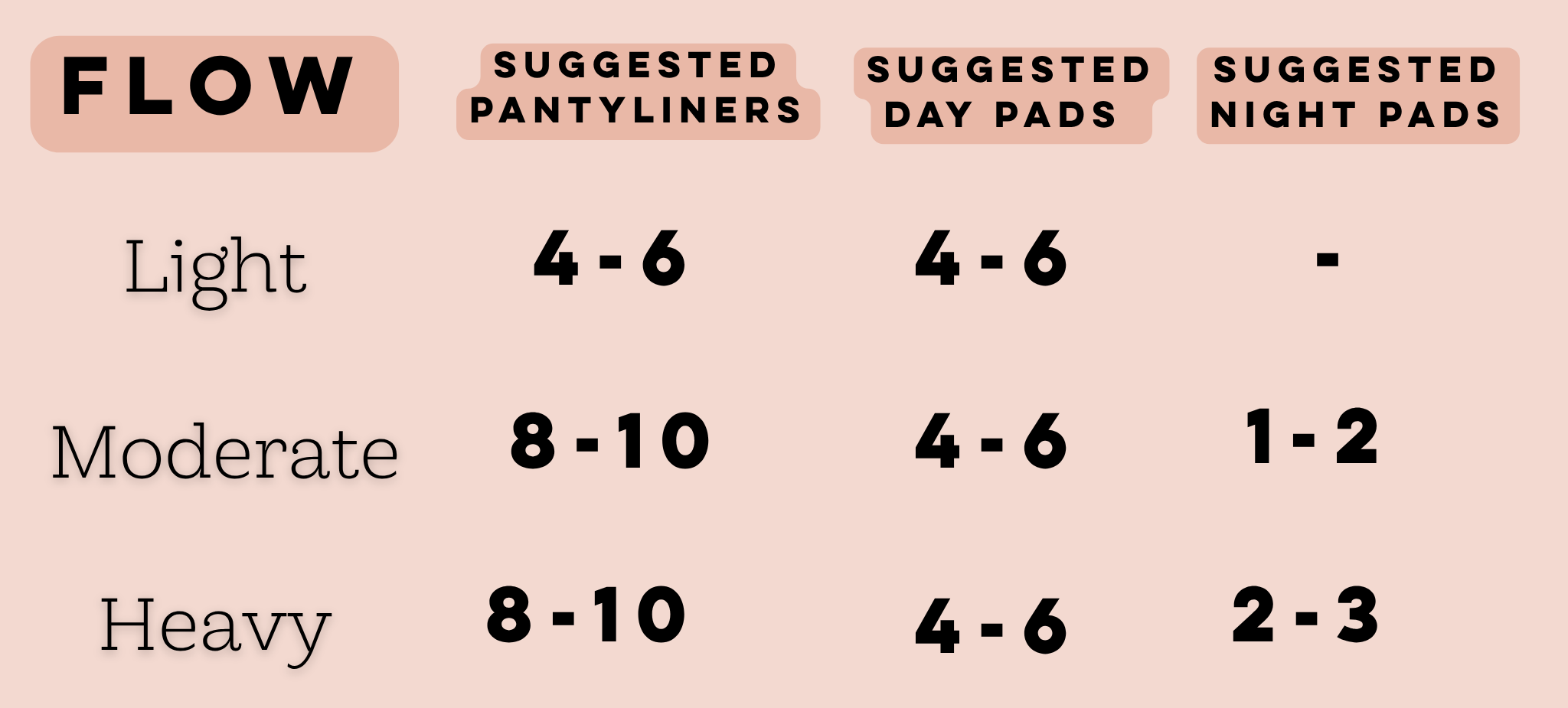
The simplest approach: count how many disposables you typically use in a cycle and replace them one-for-one.
You don't have to buy a full set right away. Starting with a few pads and a couple of pantyliners is a low-commitment way to figure out what works for you — plan to wash mid-cycle so you always have a clean pad ready.
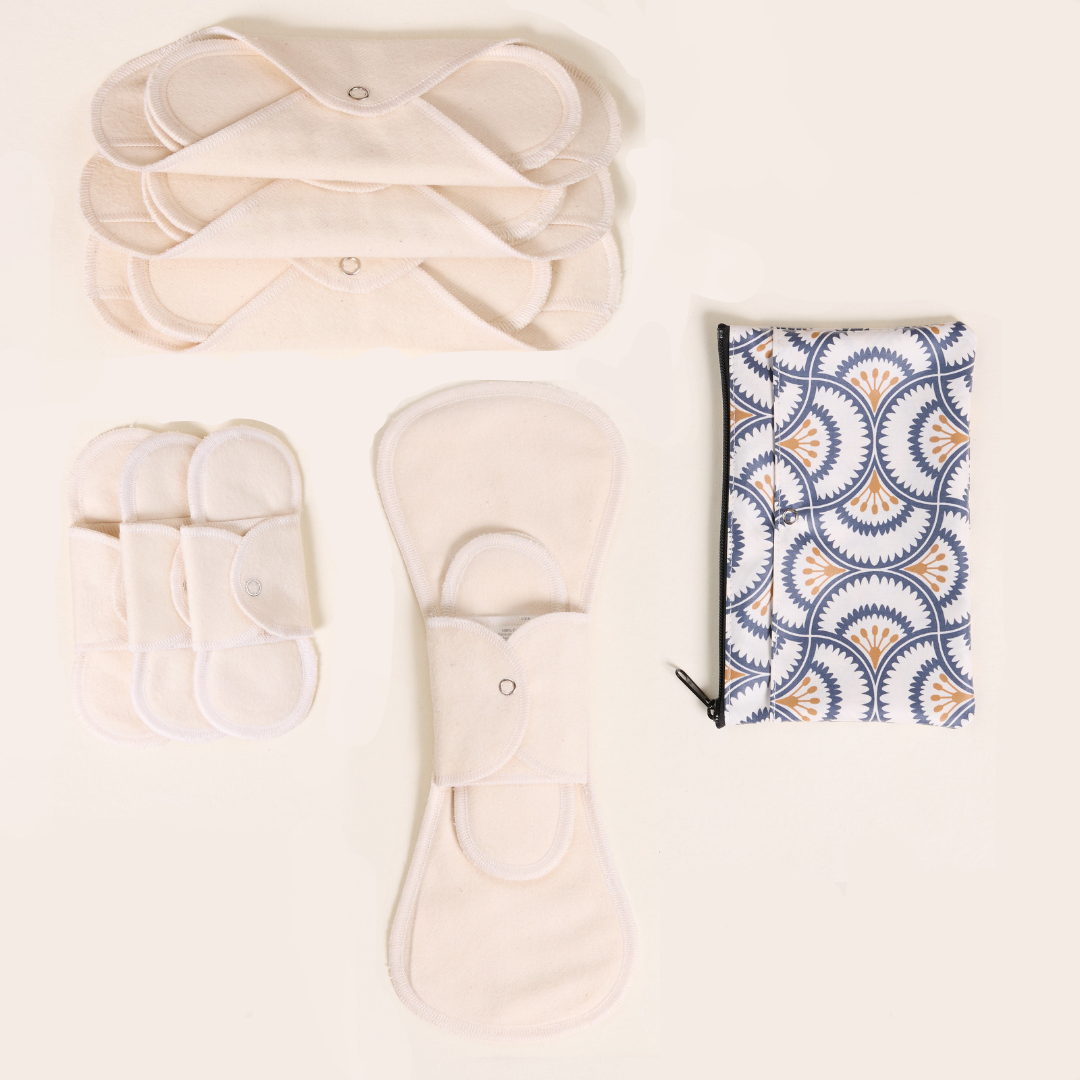
Cloth Pad Starter Kit
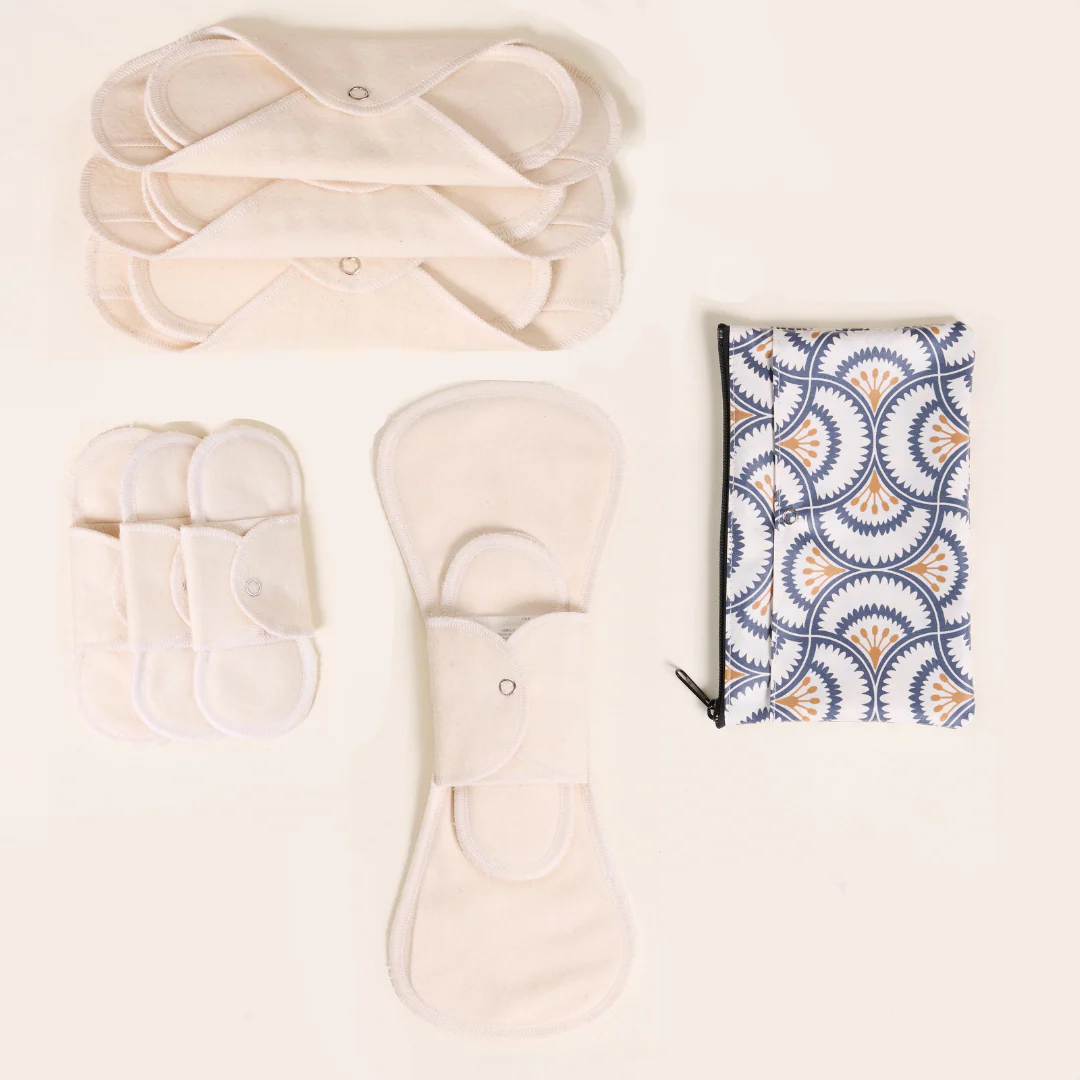
If you'd rather start with a curated set, our Cloth Pad Starter Kit bundles the most-reached-for sizes together and saves 15-20% compared to buying individually.
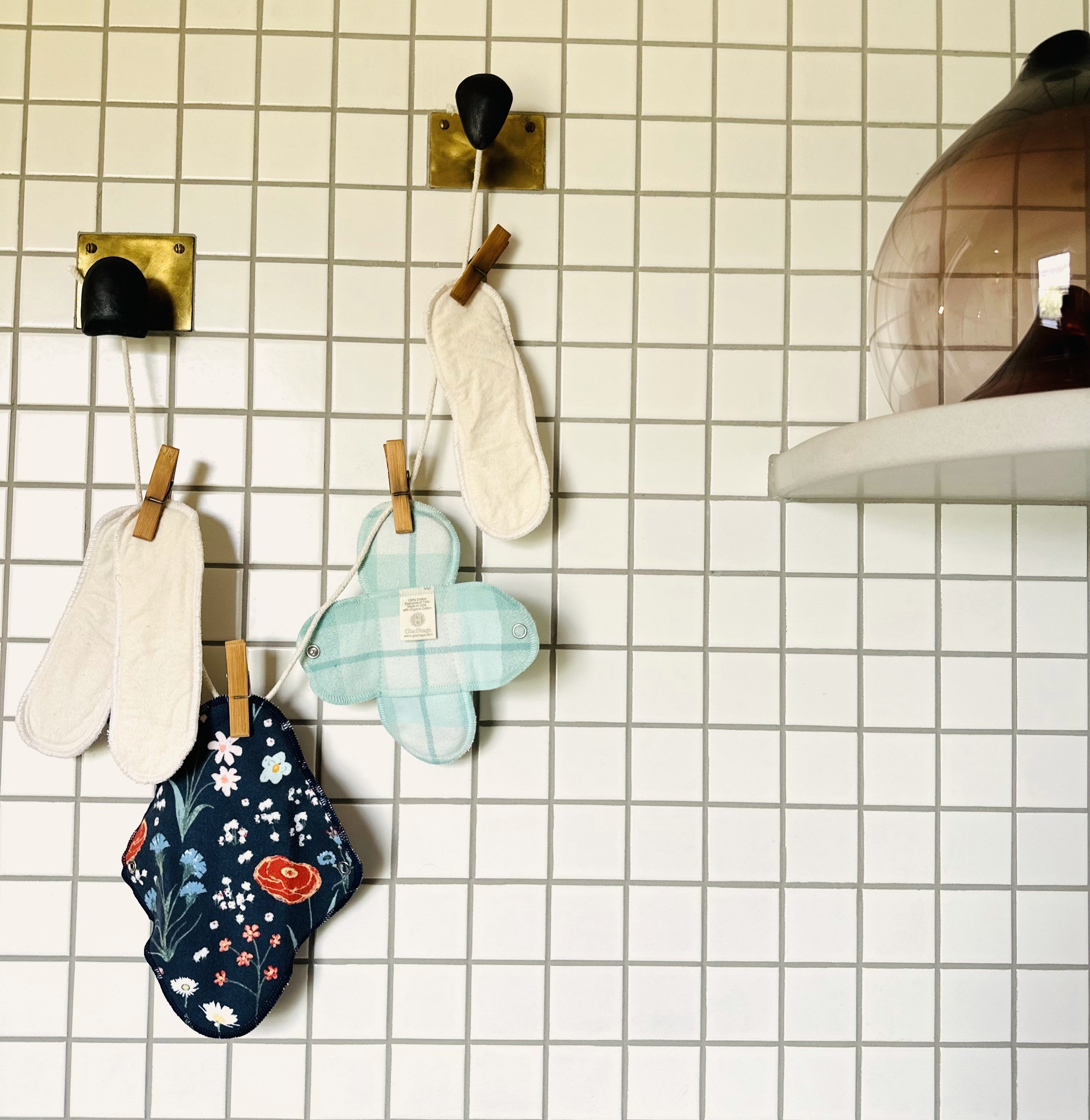
How To Wash Reusable Pads
Caring for cloth pads is simple.
- Separate inserts from the holder before washing (pantyliners are a single piece — no separation needed)
- Optional: Soak in cold water first to reduce staining
- Machine wash cold with your regular detergent — no bleach, no fabric softener (tip: use a mesh laundry bag to keep all your holders and inserts together)
- Tumble dry low or hang to dry; smooth them out while warm to reduce wrinkling
Light staining after washing is normal and doesn't mean your pads aren't clean. Cotton is naturally breathable and hygienic — a little discoloration over time is just evidence of regular use.
Choosing the Right Reusable Pad
-

Pantyliners
Shop PantylinersBest for light flow, everyday spotting, light bladder leaks, or use as backup for a cup or disc. Available in regular, plus, and thong sizes. Absorbency is comparable to a disposable pantyliner.
-

Day Pads
Shop Day PadsBest for moderate flow, standard daytime coverage, or light bladder leaks. Available in regular and plus sizes. Absorbency is comparable to a disposable maxi pad.
-

Night Pads
Shop Night PadsBest for heavy flow, overnight protection, or postpartum. Available in regular and plus sizes for maximum coverage. Absorbency is comparable to a disposable overnight pad.
Not sure which sizes to start with? Take the GladRags Pads Quiz for a personalized recommendation based on your flow and preferences.
Questions We're Asked By First Time Users
Are reusable pads hygienic?
Yes. Washing in cold water with regular detergent is all it takes to clean cloth pads thoroughly. Light staining doesn't mean they're unclean — cotton is breathable and naturally resistant to bacterial growth when washed and dried properly.
Do reusable cloth pads leak?
When sized appropriately for your flow, reusable pads perform comparably to disposables. Day and Night pads include two inserts so you can dial in absorbency for heavier days. That said, just like a tampon, they will leak through eventually. It takes a few cycles to get to know your rhythm, and that’s totally normal. We suggest changing pads more frequently than you normally would until you’re comfortable with this new process.
How long do reusable pads last?
GladRags pads are guaranteed for a minimum of 5 years. Many customers use theirs for 10 years or more with regular washing.
Can I use reusable pads for light bladder leaks?
Yes. GladRags are amazing for light leaks! The Pantyliner Plus and The Day Pad work well for light bladder leaks. GladRags are not intended for full bladder leaks.
What if I'm out of the house when I need to change?
Fold the used pad inward, snap the wings closed, and tuck it into a Carry Bag until you get home. Rinse or soak when you're back, then wash with your next load.
Do reusable pads smell?
When cared for properly, reusable pads shouldn’t have lingering odor. If you’re noticing smells, it usually comes down to washing or drying methods.
Ready To Make The Switch?
Reusable cloth pads are comfortable, cost-effective, and — once you've got a routine down — genuinely easy. Most people who switch don't go back.
If you’re still deciding whether reusable cloth pads are right for you, comparing them to disposable pads or period underwear can help clarify what fits your lifestyle best.
Start Building Your Collection While Saving 15-20% With A Kit
-
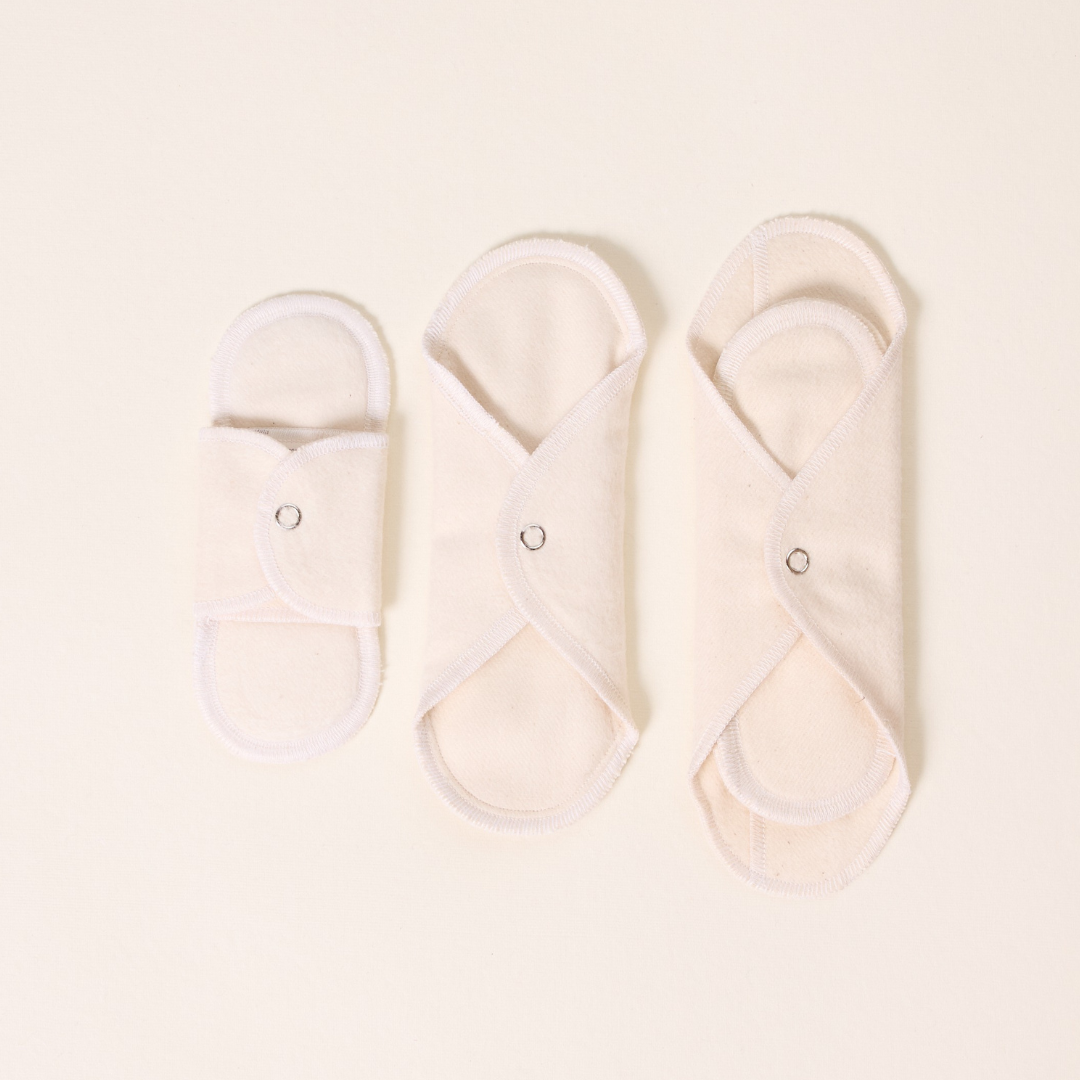 Light Flow SamplerLight Flow Sampler
- Regular price
-
$39.00 $47.00 - Regular price
-
- Sale price
-
$39.00 $47.00
Quick view
-
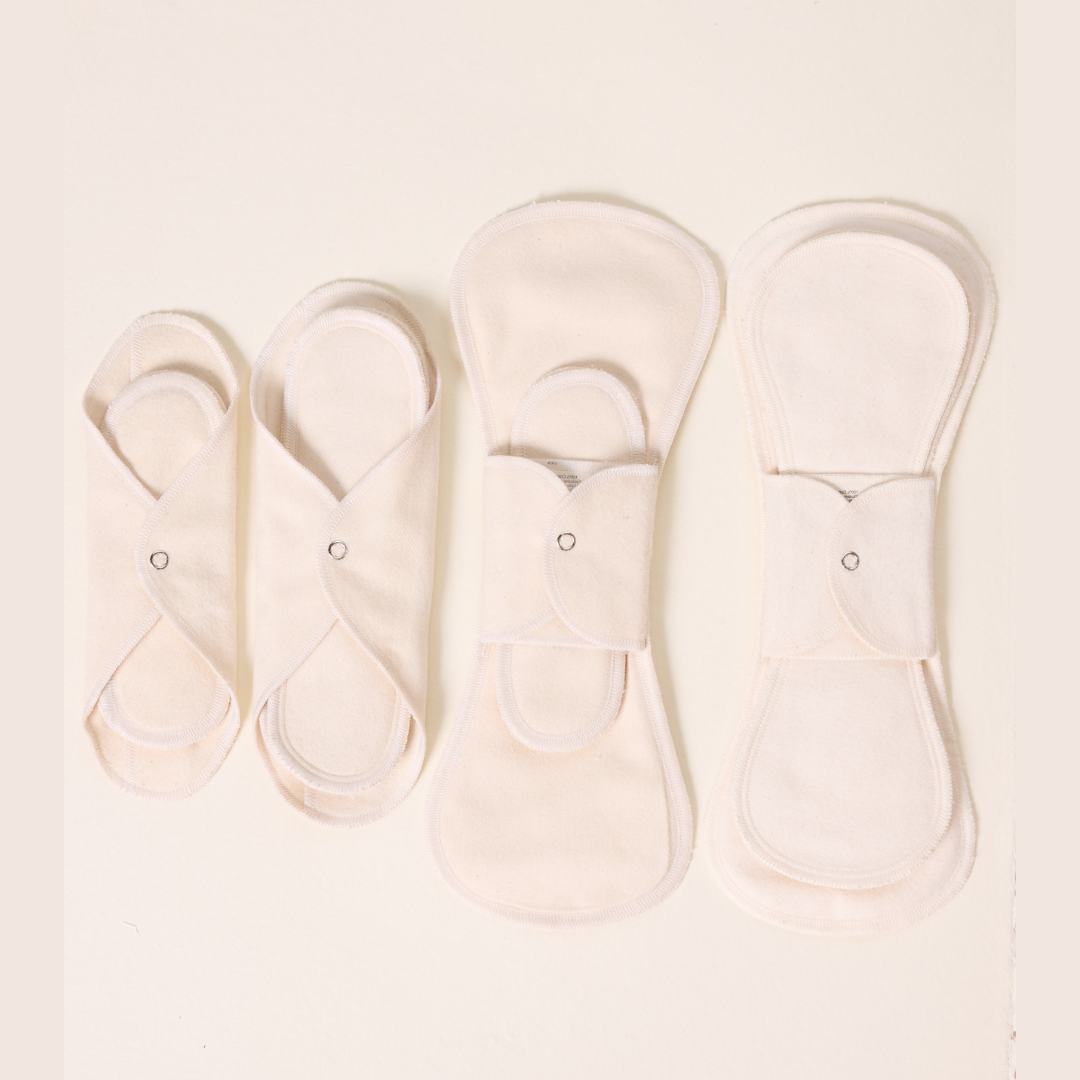 Heavy Flow SamplerHeavy Flow Sampler
- Regular price
-
$82.00 $95.00 - Regular price
-
- Sale price
-
$82.00 $95.00
Quick view
-
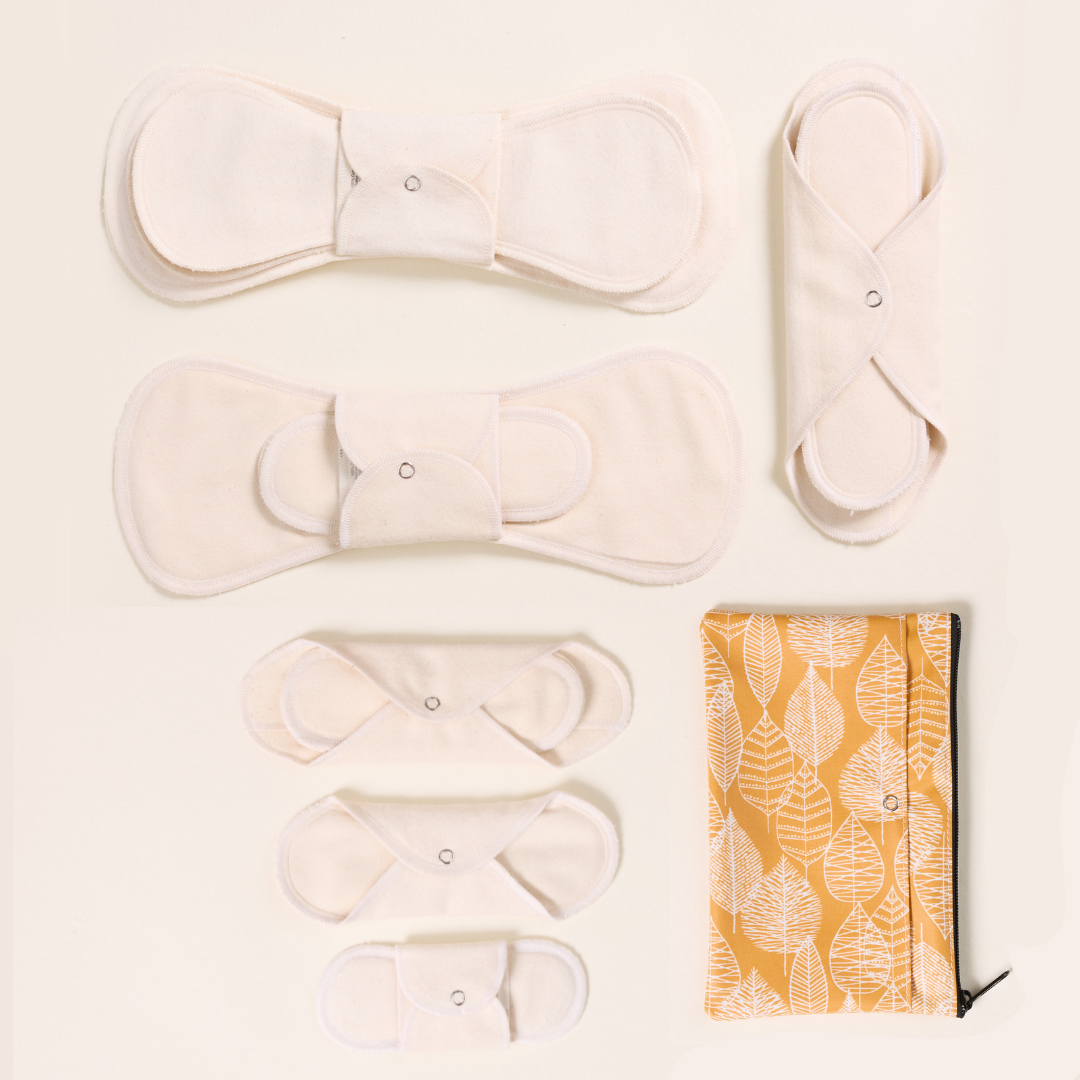 Cloth Pad Complete Size KitCloth Pad Complete Size Kit
- Regular price
-
$120.00 $137.00 - Regular price
-
- Sale price
-
$120.00 $137.00
Quick view
-
 Cloth Pad Starter KitCloth Pad Starter Kit
- Regular price
-
$120.00 $141.00 - Regular price
-
- Sale price
-
$120.00 $141.00
Quick view
